
Mya Chemonges-Murzynowska: Social Entrepreneur Story
Mya Chemonges-Murzynowska, Co-Founder of the African Caribbean Asian and Mixed Heritage Association, needed peer support, fresh thinking and confidence to grow her impact across the Highlands.
In Mya’s household there are eight heritages: Polish, Irish, English, Scottish, Kenyan, Ugandan, Malawian and Italian. She wanted her children to embrace every one of them, without being made to choose.
“I wanted to ensure that my children didn’t pick one over another,” she says. “That they could celebrate and embrace all eight heritages. That one wasn’t superior and one inferior – they could all be equal.”
Along the way, Mya met other parents in mixed-heritage households who wanted the same thing, but none of them could find support.
The ambition: a place where no one has to choose
African Caribbean Asian and Mixed Heritage Association (ACAMHA) began as Mixed, Blessed and Blended, a small group shaped by Mya’s own family.
As families with Asian and mixed-heritage backgrounds joined, it became ACAMHA, and since then it’s grown quickly, reaching members from Fort William, Fort Augustus and Skye to Stornoway, Aberdeen, Perth and Dundee.
That support is wide-ranging, supporting families affected by domestic abuse, victims of race crime, and refugees and asylum seekers. It runs mental health workshops, civic education, understanding finances, parenting support and cultural education on “the do’s and the don’ts” of life in a new country.
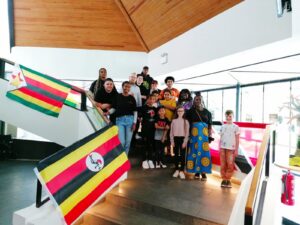
ACAMHA’s projects are a powerful demonstration of what happens when diverse communities come together. “Woven in the Fabric of Community” brought African fabric, Caribbean designs, Afghan fabric and tartan together to tell shared stories, and a recent community event brought 250 people from 50 nationalities into one room.
For Mya, the point of these events is simple. “People are developing friendships with someone they would never have even interacted with in the streets. They are learning about other cultures and sharing their own.”
Mya’s longer-term ambition is a multicultural academy. “An environment where you don’t have to belong to a specific group to access the services. You could just be curious.
She wants it to give practitioners confidence too. “We don’t want people tiptoeing. If they’re doing Chinese Week or celebrating Ramadan, they can go somewhere and know they can rely on the information, whether it’s academic or lived experience.”
The challenges: leading without example

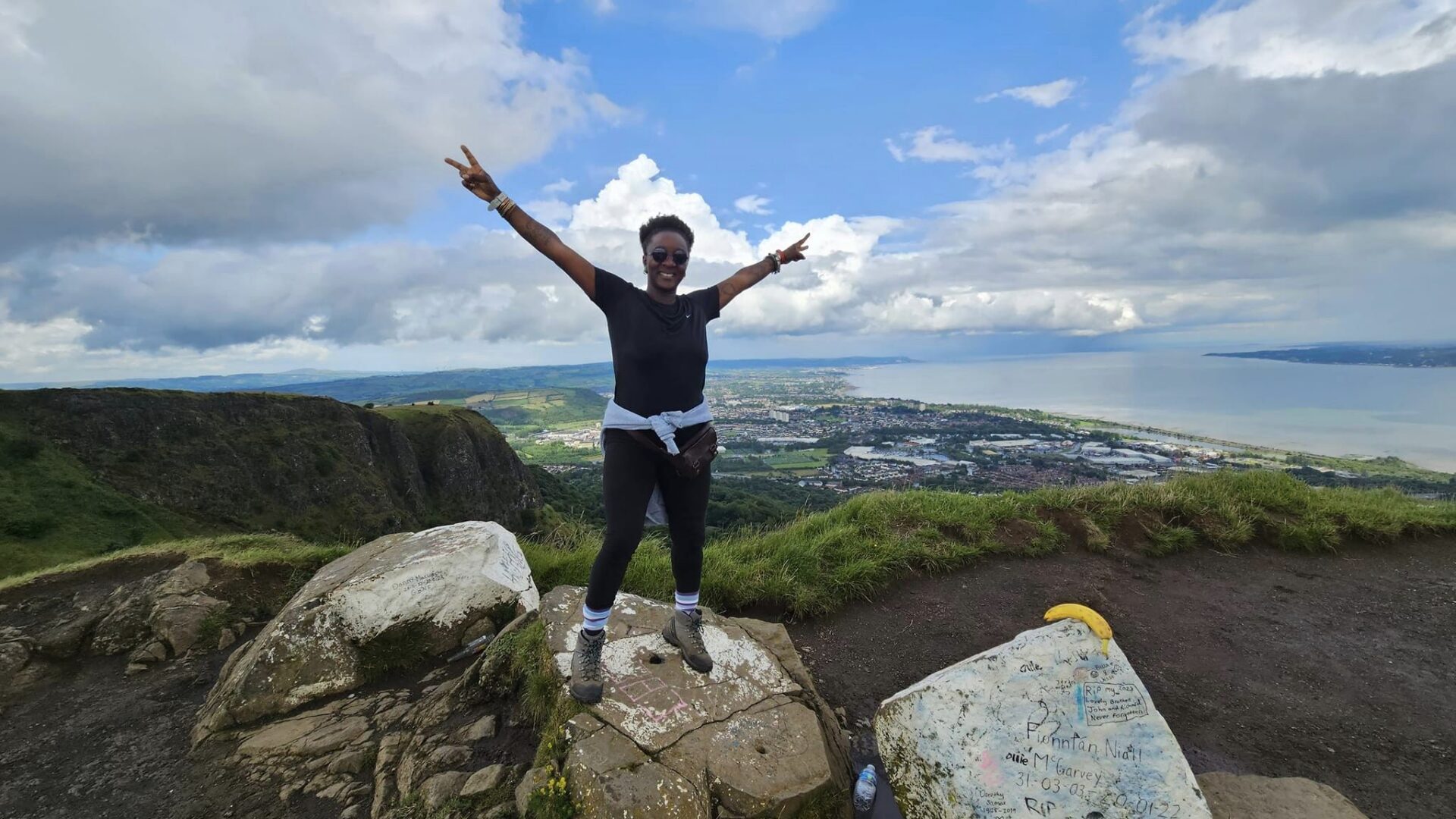
Mya Chemonges-Murzynowska
As ACAMHA grew, Mya gave up part-time roles in early years care and Citizens Advice, and she throws every hour she’s got into ACAMHA.
The hardest part of leading it was isolation. “The challenge is that no one is doing what we’re doing. That has always made it difficult to seek support from your peers. A lot of people have just said, ‘I don’t know how you do that’.”
Mya also knew ACAMHA would run into systemic barriers.
One challenge is distance from support. “When I went on this journey, I spent a lot of my time going down to Glasgow and Edinburgh because that’s where everything was happening. It sometimes feels like the Highlands is 50 years behind.”
The second is representation. “When you want to start a business, who can I go to for advice and support? The person you’re going to speak to doesn’t look like you. So they’re not going to understand some of the barriers you’re going to experience.”
She also recognises other issues through her own experiences, but also the people she supports.
Discrimination is a big one. “When you’re filling in a form, your name dictates how far things will go,” Mya says. “People are looking to rent something, and the agent sees the name and says, ‘No, it’s not available.’ Some are asked for six months’ rent in advance before they can take on premises.”
Skills and track records are often discounted too. “Someone has a PhD, a master’s and a few degrees, and they’re working at Tesco because they have to go through another system to prove their qualifications are good enough,” she says. “They need experience, but to get experience they need the job.”
What she needed: to step out of the silo
What Mya wanted most was simple: other people. “I wanted to learn from other people. I knew the challenges I was facing, and I knew that no one could save me.”
“I thought, if I’m feeling like that, I’m sure other people are in a similar situation, working in their own little silos, feeling like no one else is doing this.” She wanted to hear how other leaders were coping.
With the Highlands becoming more diverse, Mya also wanted to share experiences from ACAMHA with other community leaders.
Two programmes, two very different rooms
Mya found the opportunities for peer learning through two Social Enterprise Academy residentials, both held at Dundreggan Rewilding Centre in Glenmoriston.
The first was Active and Sustainable Travel in Rural Communities, a two-day programme in November 2025, fully funded by the Highlands and Islands Climate Hub. It brought together people planning community-led responses to the climate emergency, and introduced collaborative leadership, communicating vision and behaviour change.
Many of Mya’s fellow participants were men who had held very senior positions. “It allowed me to think differently about dealing with organisations where men were predominantly the policymakers and the decision makers,” she says. “It opened a different tab in my head, and forced me to think outside the box.”
The second was the three-day Developing Sustainability Residential in May 2026, funded by the National Lottery Community Fund. It helps organisations with environmental aims become more sustainable, using design thinking, solution circles and action learning sets.
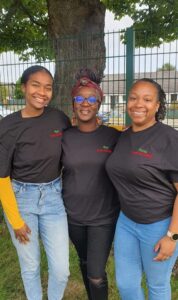
This time, the room was almost all women, and Social Enterprise Academy created space for honesty. “We could just keep it real,” Mya says. “Not just in a professional capacity, but to talk honestly about challenges you’re facing as a woman, and in your own personal life, that were having an impact on your work.”
She adds. “The three days I spent there were my favourite. We’ve kept in touch, and we’re actually doing a project with one of the women.”
Across both programmes, the effect on her was the same. “I walked away feeling like I could start running the country,” she laughs. “I felt really, really empowered.”
Where Mya is now
Mya went in wanting to learn how others were overcoming the challenges she was experiencing, and she came out asking a bigger question. “How do we maximise members’ full potential?” she says. “How are we supporting them to be a better version of themselves every single day? We hadn’t looked at it from that perspective before.”
That question has already changed how ACAMH works: creating a skills database so members can support one another, changing evaluation methods to ensure members are represented and protected simultaneously, and helping members to receive feedback, which can be culturally alien.
One conversation on the programme, about community ownership support, crystallised what ACAMH is for. “If you understand the law and the language, you can challenge decisions without having to rely on an organisation,” Mya says. “As long as you know what your rights are, and you’re empowered to use them from a fact-based perspective rather than an emotional one, it becomes easier to advocate for yourself. ACAMH has always been about empowering people to find the solutions.”
Another idea from the programme is now written on her wall: Are you truly the right person as the job keeps changing?
“I don’t ever want to occupy this space just because I’m the founder,” Mya says. “We’re constantly evolving. I need to be able to answer that authentically, without thinking twice: yes, I am the right person for this job. And if I’m not, then who is? And making sure that person can carry on the vision.”
What needs to change
Mya concludes, “If I hadn’t had those two sessions, I wouldn’t have had the experiences and the insight to look at the organisation slightly differently,” she says. “Being in that environment allowed me to walk away and say, ‘They’re doing this. Why don’t we try that?’”
She wants funders, partners and support organisations to involve diverse communities from the start. “When we’re invited to a table, it’s normally when 80% of the work has been done, and you just come in as a tick-box,” she says. “If you’re inviting people, and you really want their input, it’s from the outset. The co-designing conversation needs to involve both parties at the outset, not when you’re asking people to just come and do the photo ops.”
She also wants more chances for businesses to gain experience and learn from each other. “When I hear someone say, ‘This is how I ran my business back in my country,” then we can connect them to speak with someone who has done a similar business in Scotland,” she explains.
That is the kind of ripple Social Enterprise Academy exists to create: developing people who go on to drive change. In Mya’s case, two residentials in the Highlands have reached far beyond one leader, into a growing, diverse community across the north of Scotland who are changing how cultures and representation in the Highlands is understood and celebrated.