

How Museums Galleries Scotland is Strengthening the Future of the Sector
Across Scotland, museums and galleries play a vital role in communities – protecting heritage, inspiring learning, and creating spaces where people connect with culture.
Across Scotland, museums and galleries play a vital role in communities – protecting heritage, inspiring learning, and creating spaces where people connect with culture.
But behind the scenes, many organisations are under significant pressure.
For Museums Galleries Scotland (MGS) – the national development body for the sector – supporting the resilience of museums means investing in the people who lead them.
And that means developing leadership.
Recognising a Leadership Gap
John Campbell from MGS has spent years thinking about how the sector builds skills for the future. When he joined the organisation seven years ago, MGS was already thinking differently about professional development.
“We were looking to really transform the way we approach skills development,” he explains. “We identified various different areas where there were skills gaps, but one that stood out was leadership.”
“Many museums report that they are experiencing significant challenges. Leadership is critical to that, without strategic planning and effective decision-making, business skills, and leadership, you will struggle to operate a thriving, sustainable organisation,” John shares.
MGS supports museums and galleries across Scotland through many different channels such as grant making, workforce training & development and more broader sector development activities.
Many people join the sector because of their passion for history, collections, or community engagement. Leadership training is not always part of the journey.
“People within our sector often get into it because they’ve got an interest or passion for museums or galleries,” says John. “They don’t necessarily have an interest in managing teams or leading their organisations; sometime people can be promoted to leadership or management positions with little training or relevant experience of managing teams.”
MGS recognised that building leadership capability was not just about individual development – it was about the future sustainability of the entire sector.
Designing Leadership for the Sector
To address this challenge, MGS began looking for a partner who could help design a leadership programme tailored to the needs of museum professionals.
The goal was clear: support mid-career professionals – aspiring leaders who had been in their roles for several years – to grow their confidence, skills, and leadership identity.
MGS wanted something deeper than short training sessions.
“We wanted to move away from short, sharp interventions,” John says. “Our aim was to deliver something that created a legacy and offered participants the opportunity to tailor and embed their learning around leadership.”
This search led them to Social Enterprise Academy.
A Partnership Built on Understanding
What stood out immediately to John and his team about Social Enterprise Academy (SEA) was not just the course content – it was the approach.
“No other provider really took the time to sit down and discuss our specific needs,” John says. “People buy from people. There was just a different level of engagement with Social Enterprise Academy.”
Rather than offering a generic programme, SEA worked closely with MGS to shape a course that would work for the sector and our range of aspiring leaders.
“They came to the office; we had a chat. They really asked about our needs,” John explains. “We relied on their expertise – to support us what we needed.”
Together, they created a leadership programme focused on:
· self-awareness and leadership style
· emotional intelligence, communication, and motivation
· managing change
· influencing and managing upwards
Crucially, the programme also offered ILM accreditation, giving participants a recognised qualification and even the opportunity to progress into further study.
“That pathway allowed people to move into year three of a degree at Napier University,” John explains. “So, the qualification is recognised across the sector and aligned with Lifelong Learning.”
Since launching, MGS and Social Enterprise Academy have delivered at least two cohorts every year, typically supporting 12-15 participants per cohort.
The Power of Shared Learning
One of the most powerful elements of the programme has been the peer learning experience.
Many museum professionals work in small or siloed organisations, often without opportunities to connect with others facing similar challenges.
The course creates space for that genuine connection.
“The participants coming on the course are typically aspiring leaders and we ask that they have roughly 3 years of leadership or management experience; it’s very peer-to-peer led programme; so, they can attend and share their experience.”
“Participants really love having the chance to speak with people they would never normally meet,” John says. “That shared understanding – that it’s not just me dealing with this challenge – people thrive on that.”
Participants return to their organisations not only with new knowledge, but with increased confidence and a shared network of support.
“That feeling of empowerment and self-confidence is huge,” John explains. “Across 16 to 20 courses, we’ve had something like 99% positive feedback.”
Leadership That Changes Lives
In some cases, the impact has been transformative.
“We encourage our own staff go on the programme,” John recalls. “One staff member was very reflective during the programme – it was life-changing for him. It completely changed the way he worked and the way he lived.”
“Participants have feedback they experience significant positive career development within the first year of completing the programme, with many reporting a promotion.”
For MGS, that movement is part of the goal.
“It’s about increasing the competency and capability of the whole sector,” John explains. “Even if people move on, we want them to stay within the heritage and cultural sector and retain that new competency in our sector.”
The programme strengthens the leadership ecosystem across Scotland’s museums, not just within individual organisations.
Building the Future of the Sector
Today, leadership development is more important than ever.
MGS has recently launched Museum Futures, a major initiative supported by £4 million from the Scottish Government to help museums navigate financial challenges and build sustainable models.
“Leadership is absolutely critical to that,” John says. “Without effective leadership you will be unable to operate a thriving organisation.”
That means building not only curatorial expertise, but also business capability, enterprise & innovation skills, and leadership confidence.
John explains. “People need the confidence and skills to manage teams, plan strategically and diversify income.”
And it starts with investing in people.
A Partnership That Makes It Possible
For John, the long-term relationship with Social Enterprise Academy has been a key part of making the programme successful.
One particularly valuable element has been continuity.
“We use the same trainer and facilitator every time, which has been a massive benefit,” John says. “Sally understands the challenges our aspiring leaders face – sometimes even more than we do.”
The partnership has also expanded beyond leadership into areas like governance and board development.
Throughout it all, John says the experience has remained consistent.
“I’ve worked with seven or eight people from Social Enterprise Academy over the years,” he says. “They’ve all been good – proactive, supportive, and they understand what we need.”
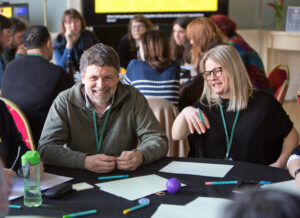
Investing in People, Strengthening the Sector
At its heart, this work reflects MGS’s role as a national development body. Supporting museums is not only about funding projects or preserving collections.
It is also about building the skills, confidence and leadership capacity that will sustain the sector for the future.
And for John, that investment is already paying off. Because when leaders grow, the whole sector grows with them.
Social Enterprise Academy supports associations like Museums Galleries Scotland to develop leadership capabilities that will help them secure the future of sectors under ever-increasing external pressures.
With a blend of values-based leadership and commerciality, the team design bespoke programmes based on decades of experience. If you are interested in finding out more about how SEA can support your team, please contact [email protected]